Leave a Little Room: How to Pick Engraving Words Your Wooden Gift Won't Outgrow
Photo: Justine C. Lamis, CC0, via Wikimedia Commons
A wooden keepsake is a slow object. It doesn't refresh, update, or sync. That's the whole point. But it also means the words you engrave on it have to do something most captions never do: age gracefully.
At Gifts in Grain, we've watched shoppers fall in love with a clever line in November and then hesitate over the proof in December. Usually the hesitation is wise. The phrase that feels perfect on a screen can feel crowded on cherry, or too specific for a gift meant to sit on a mantle for years. The goal isn't a perfect sentence. It's a sentence with breathing room.
Start With the Grain, Not the Greeting
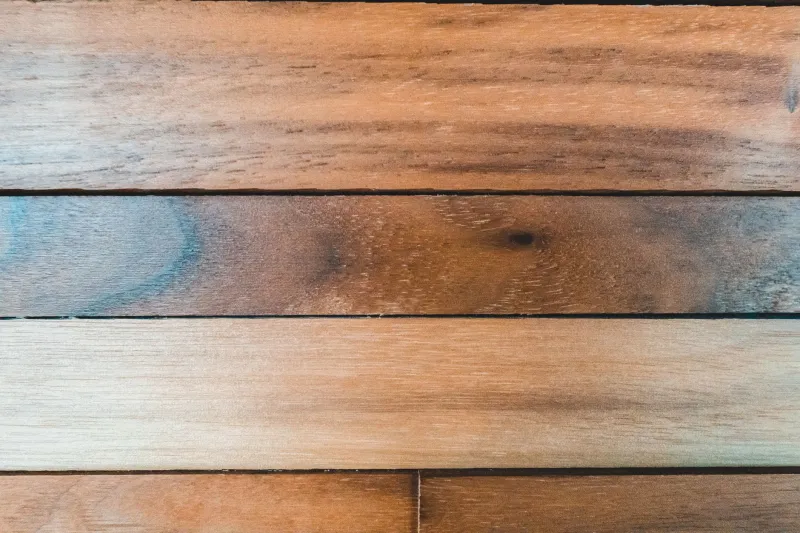
Wood is not paper. Long lines, tiny serif fonts, and a lot of punctuation can turn to mush once the engraver meets the grain. A knot can interrupt a letter. A tight curve can make an apostrophe disappear. We'd rather adjust the words than fight the material.
For most keepsake boxes, cutting boards, frames, and signs, aim for three to eight words. Small tags and ornaments often do better with one to three. If a date matters, put it on the back or along the bottom edge, where it can be small and quiet. If a name is the heart of the gift, let the name be enough. A single name engraved with care can say more than a paragraph squeezed into a four-inch lid.
The Case for Fewer Words
Specificity is lovely until it becomes brittle. 'Best Roommate 2026' is fun in 2026. In 2036, it might feel like a time capsule nobody asked to open. That doesn't mean every inscription needs to be poetic and vague. It means the words should still be true after the inside joke has lost its punch line.
A good test: read the line out loud and ask whether it describes a moment or a relationship. Moment lines are temporary. Relationship lines tend to keep. 'Our first apartment' is a moment, but it's a sweet one and often worth keeping. 'Socks optional' is a private joke that may need explaining to a future spouse. If the recipient would have to unpack it for a guest, it may belong on a card instead of in oak.
Names, Dates, and Other Facts That Change
Names are usually safe, but nicknames deserve a second look. A childhood nickname can be tender on a jewelry box and awkward on a desk piece. Check spelling, accents, apostrophes, and capitalization before you approve anything. If a name is about to change, don't guess. Use first names, initials, or a shared last name only if you're certain it will stay.
Wedding gifts are where this gets tricky. Not every couple keeps a surname, and not every couple wants one. 'A + J, est. 2026' is warm and flexible. 'The [New Last Name] Family' is lovely when you know it's right and uncomfortable when you don't. Birth gifts can safely carry a baby's full name and birth date. Weight, time of birth, and hospital details are usually better left for the baby book. Anniversary gifts should avoid ordinal numbers — '10th' becomes wrong the next year — unless the piece is meant to mark one specific party. Housewarming gifts should be careful with street addresses. People move. 'Welcome home' and 'The kettle's always on' travel better than '412 Maple Street.'
Inside Jokes, With a Long Fuse
Some inside jokes become family lore. Others expire quietly in a drawer. The difference is usually whether the joke is about a shared bond or a temporary situation. 'Still our spot' can work for decades. 'Spring break 2026' probably won't.
Keep inside jokes short. Two to four words is plenty. If the joke needs a setup, put the setup in a handwritten note and let the engraving be the punch line. And if the gift is for a workplace or a formal setting, read the line through a stranger's eyes before you commit.
Memorial Language: Gentle and Plain
Memorial pieces carry more weight than most gifts, so simpler is usually kinder. Full names and dates are appropriate. A short line can be beautiful if it sounds like the family's voice rather than a greeting card's. 'In loving memory of [Name]' is plain and lasting. 'Love stays' is quiet and open. 'Always in the garden' works for someone who spent Saturdays outside.
Before engraving a memorial piece, ask someone close to the recipient to read the wording. Grief has its own vocabulary. A phrase that comforts one family may land wrong in another. That's not a reason to avoid meaning. It's a reason to slow down.
Sample Lines That Leave Room
- Wedding: 'Two names, one good story' / 'A + J, est. 2026' / 'Always room for you'
- Birth: 'Hello, [Name]' / '[Name], born [date]' / 'Our newest branch'
- Anniversary: 'Still choosing each other' / 'The best kind of ordinary' / '[Name] & [Name], [date]'
- Housewarming: 'Welcome home' / 'Make room for good' / 'Here, finally'
- Memorial: 'In memory of [Name]' / '[Name], [years]' / 'Love stays'
A Checklist Before You Approve the Proof
- Read the line out loud. If you stumble, the engraver will too.
- Count the words. Under eight is a good rule for most pieces.
- Check every name, including middle names, accents, and apostrophes.
- Ask whether the line will still be true a decade from now.
- Avoid dates that mark a count — '10th,' 'first,' '2026 only' — unless the piece is meant to be a snapshot.
- Confirm name changes and hyphenation before a wedding or birth gift.
- Move long dates and full names to the back or bottom when possible.
- Look at the proof for line breaks, spacing, and grain. A beautiful phrase can still look cramped.
- Sleep on it. Especially inside jokes.
- For memorial pieces, have a family member read the wording first.
The best engraving doesn't try to say everything. It says the thing that will still feel true when the gift has moved houses, survived a few holiday seasons, and picked up a little patina. Leave a little room in the words. Wood has a long memory, and so do the people who keep it.