Reading the Rings: How Nature Signs Every Wooden Gift Before We Ever Touch It

Photo: Hamish Griffin , CC BY-SA 2.0, via Wikimedia Commons
Here at Gifts in Grain, we've lost count of the times a customer has picked up two keepsake boxes made from the same board and asked why they look like distant cousins instead of twins. The answer is simple and a little bit wonderful: wood doesn't do copies.
Every plank carries a signature written by decades of weather, soil, and seasons long before a saw ever touched the tree. When you give a wooden gift, you're not just giving something handmade — you're giving something that literally cannot be repeated.
What Grain Actually Is (And Why It Matters)
Wood grain is the pattern created by the arrangement of growth rings, vessels, and fibers in the trunk. A tree adds a new layer of growth every year — wide, loose rings in wet springs, tight, dense rings in dry summers. Those rings record droughts, good years, even the lean of the tree toward sunlight.
When a craftsman slices into that history, the pattern that emerges depends on how the board was cut. Plain-sawn lumber produces those cathedral arches you see on tabletops. Quarter-sawn boards reveal straight, ribbon-like lines. Rift cuts chase a cleaner, more uniform look. Same tree, completely different personalities.
Oak: The Storyteller
White and red oak are the extroverts of the wood world. Their prominent, open grain announces itself in bold rays and flecks — especially in quarter-sawn white oak, where shimmering medullary rays catch the light like scattered sparks.
Because the pattern is so pronounced, oak pieces feel rustic and grounded. Think of a farmhouse kitchen in Vermont or a front porch in the Carolinas. Oak is a natural fit for serving boards, picture frames, and keepsake boxes that want to look like they've already lived a little.
Best for: gifts with a classic, all-American feel; pieces meant to be used daily and loved hard.
Walnut: The Quiet Luxury
If oak talks, walnut murmurs. Its grain is smoother and subtler, ranging from chocolate browns to purplish undertones, often streaked with lighter sapwood that creates natural contrast without any stain at all.
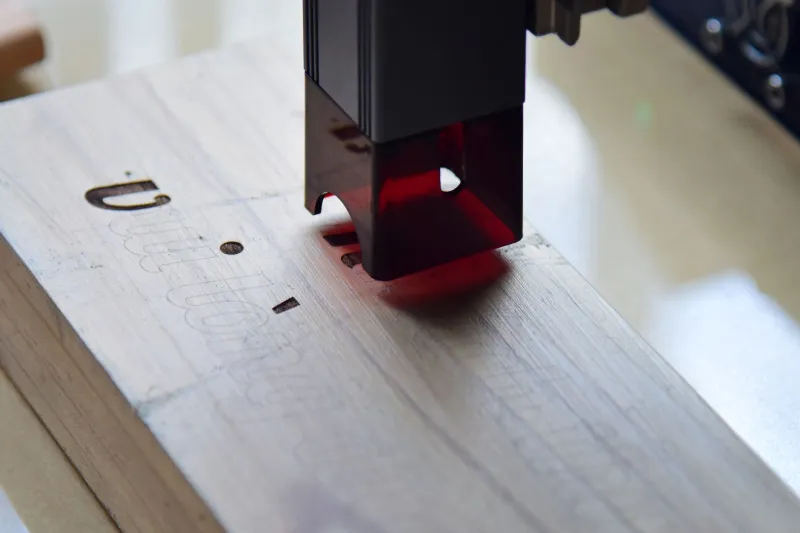
Walnut's fine texture makes it the go-to choice for engraved work. Lines cut into walnut stay crisp and legible, which is why so many of our personalized name signs and memorial pieces start as walnut blanks. It photographs beautifully, too — a real consideration when the gift is going straight onto someone's mantel (and someone's Instagram feed).
Best for: engravings, modern minimalist designs, and gifts where the message matters as much as the material.
Cherry: The Slow Reveal
Cherry is the only wood we work with that changes after the gift is given. Freshly milled cherry starts with a warm pinkish tone, then deepens over years of light exposure into a rich, amber-red patina.
That means a cherry keepsake box engraved for a newborn will look noticeably different by her high school graduation — and different again when she passes it down. The wood ages right alongside the family. We think that's about as poetic as lumber gets.
Best for: heirloom pieces, baby gifts, and anyone who loves the idea of a gift that evolves.
Why This Matters When You're Choosing a Gift
When you order a personalized wooden keepsake, you're usually picking the words. But the wood is picking its own backdrop. That swirl in the walnut behind a child's name? It showed up on its own. The flame pattern in an oak frame? No engraver planned it.
A few things we tell shoppers:
- Ask about the actual piece. Reputable makers will happily send a photo of the exact board your gift comes from.
- Embrace the character. Mineral streaks, small knots, and color variation aren't flaws — they're the proof it's real.
- Match the wood to the moment. Bold oak for milestone celebrations, quiet walnut for sympathy or memorial gifts, cherry for anything meant to be passed down.
One of a Kind, Guaranteed
There are roughly 60,000 known tree species on Earth, and no two trees within a species grow identically. The odds of duplicating a specific grain pattern are, for all practical purposes, zero.
So the next time you're torn between gift options and everything feels mass-produced, remember: somewhere in a workshop, a piece of wood is waiting with a pattern no one has ever seen before — and no one ever will again. All it needs is a name, a date, or a few carved words to become yours.
That's the story in the grain. We just help you read it.