Say It in Sawdust: The Custom Requests We Gently Talk Shoppers Out Of
We love a custom order. Truly. Half the joy of running a small woodcraft shop is the moment a customer says, "I have this idea..." and then tells us about their dad's barn, their daughter's first word, or the lake house where three generations learned to fish.
But not every idea translates well into wood. And after years at the bench, we've learned that one of the most valuable things we can do for a gift shopper is talk them out of a request before they spend good money on something that won't hold up — physically or emotionally.
So pull up a stool in the workshop. Here's what people ask for, why we sometimes say "let's try something else," and how to commission a piece we'll genuinely be proud to ship.
The Requests That Make Us Gently Clear Our Throats
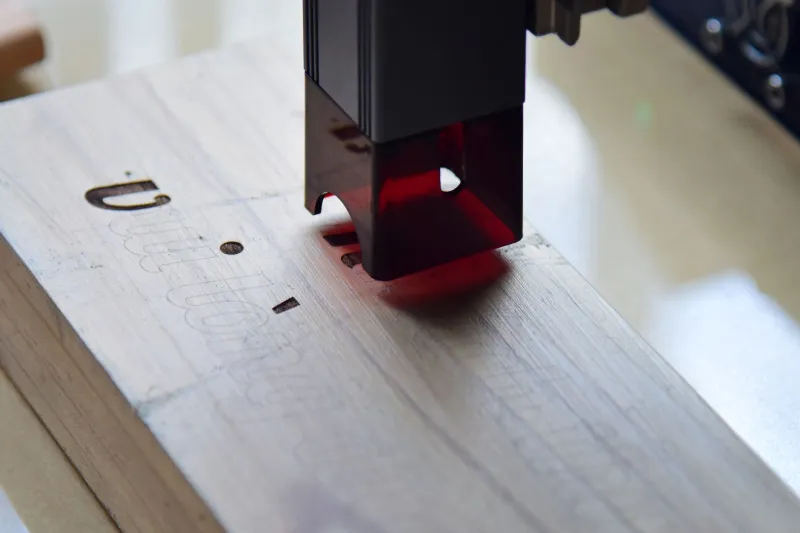
Long paragraphs, tiny surfaces. Someone will send us a four-line quote — a wedding vow, maybe, or an excerpt from a eulogy — and ask for it on a coaster. We get the impulse. The words matter enormously. But engraved text below about a quarter-inch tall stops being a keepsake and starts being a squinting exercise. Wood moves, grain interrupts, and fine letters fill in over time. If the words are the point, we'll usually steer you toward a larger plaque or a cutting board with real estate to spare.
Dates that mean nothing to anyone else. "04.17.23" is a lovely anniversary to you. To everyone else who picks up the box, it's a serial number. We're not against dates — we engrave plenty of them — but the best pieces pair the date with something evocative. The coordinates of the cabin. The name of the lake. A single word like "Always." Context turns a number into a memory.
Inside jokes with no visual anchor. A customer once asked us to engrave "The Incident" on a jewelry box. It was hilarious, she assured us, to exactly four people. That's fine! But we've learned to ask: will this still land in twenty years, when the four of you have told the story a thousand times? Sometimes yes. Sometimes the joke works better on a card tucked inside the box than carved into the lid.
Perfect symmetry. Buyers often ask us to center an engraving precisely, or to pick a board "without any character." Friends, the knots and color shifts are the point. A board with no figure is called plywood, and it's sold at a big-box store near you. (We wrote a whole piece on how nature signs every board before we touch it — the grain is the autograph.)
What Actually Works in Wood
Here's the good news: the requests that miss are outnumbered by the ones that make us put down the chisel and say, "Oh, that's good."
Short and soulful beats long and literal. Three to seven words on a bread board. A single name on a baby rattle. A last name and an established date on a serving tray. Restraint reads as confidence, and it lets the wood do half the talking.
Handwriting, when we have enough of it. If you can give us a clear scan of a loved one's actual penmanship — a signature, a short note — reproducing it in engraving is one of the most moving things we do. A grandmother's "Love, Nana" on a recipe box will outlast every store-bought gift in the kitchen.
Textures that invite touch. The most successful custom pieces aren't just read; they're handled. A finger-worn edge, a carved wave pattern from a favorite shoreline, a live edge left raw on one side. If your idea makes someone run their thumb across it, it's a keeper.
Stories we can build around. "My father built chicken coops" gives us a shape, a wood choice, a motif. "Something nice for Mom" gives us nothing. The more story you bring, the more the piece can carry.
How to Commission Something We'll Stand Behind
A few honest tips from the maker's side of the bench:
Ask what the wood wants. Tell us the story first, not the design. A good maker will propose a form you hadn't considered — and it'll be better than the one you brought.
Trust the grain. We can't always place text exactly where you pictured it, because the board has opinions. Flexibility here is the difference between a good piece and a great one.
Budget for the story, not the square inch. Custom work isn't priced like a factory item. You're paying for design conversation, material selection, and the hours at the bench. A smaller, thoughtfully made piece beats a big, rushed one every time.
Order early. Wood needs to be selected, milled, shaped, sanded, finished, and cured. Rush orders force compromises — usually in the finishing, which is exactly what protects your gift for the next fifty years.
The Bottom Line
Wood is an honest material. It swells with humidity, darkens with age, and shows every mark we make. The best engravings respect that — they're short, tactile, and paired with the character of the board instead of fighting it.
So when you come to us with an idea and we suggest a tweak, know that it's not a sales tactic. It's a craftsman trying to make sure that in twenty years, when your gift is sitting on a shelf in someone's kitchen, it still says exactly what you meant.